
Thread Transfer
Why bundles beat raw thread history
Inside the customer interviews, failure modes, and success metrics that pushed us to replace raw transcripts with deterministic bundles.
Thread Transfer
AI Systems for Builders
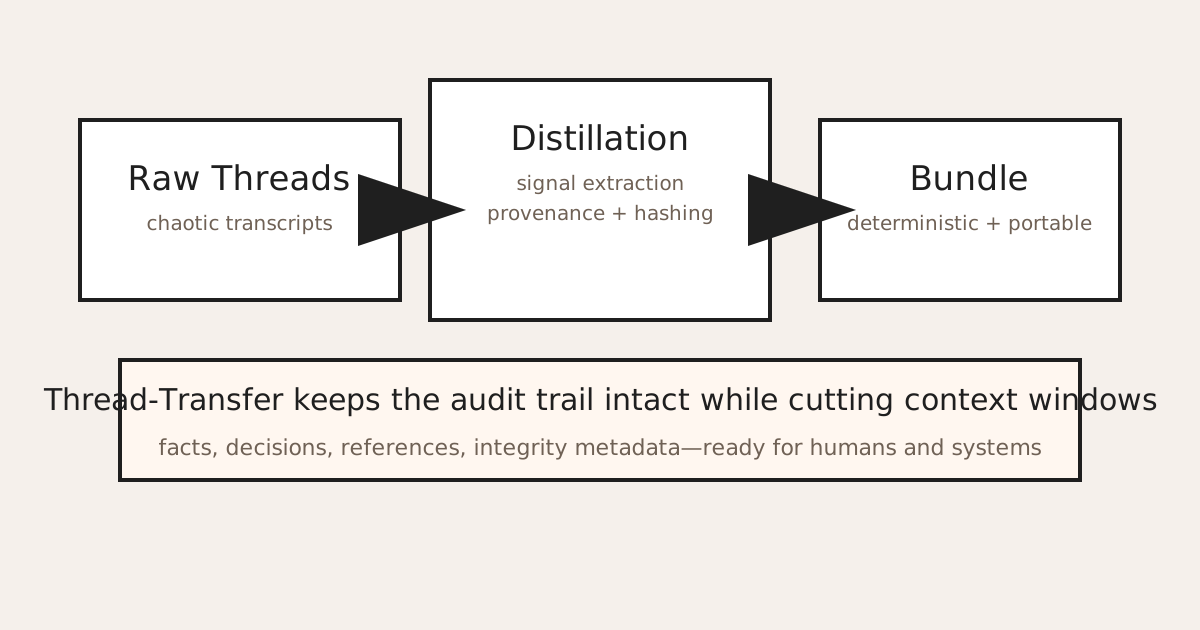
The earliest internal prototype of Thread-Transfer was basically a glorified JSON dump. We took raw chat logs from Slack, lightly annotated them, and called it a day. Customers were polite, but unenthused. It wasn’t until we started delivering deterministic bundles—structured documents with provenance baked in—that the product clicked. This post explains why raw thread history falls apart at scale and how bundles solved the pain points customers cared about most.
The friction with raw threads
After a dozen customer ride-alongs, three themes showed up everywhere we looked:
- Context drift. Every hop introduced manual editing. Support agents copied the thread into a doc, trimmed jokes, and lost timestamps. By the time engineering saw the conversation, nobody trusted the quotes.
- Mystery invoices. Finance teams could see token usage rising but struggled to attribute it to a specific channel or use case. Without structure, raw threads are impossible to budget against.
- Audit anxiety. Security reviewers hated the idea of mutable summaries floating around with no provenance. If a decision landed in court, how could they prove a trimmed transcript mapped to the original conversation?
What makes a bundle different
A Thread-Transfer bundle is a deterministic, signed package. It contains:
- Blocks grouped by intent—facts, decisions, follow-ups, references—each linked to the source message ID.
- Integrity metadata including a SHA-256 hash, the distillation recipe version, and the tokenizer used during export.
- Human-readable narrative so teammates can scan quickly, paired with structured fields that downstream systems parse automatically.
Design principles we refused to compromise on
Three guardrails kept us honest while building bundles:
- Determinism or bust. Given the same inputs, the bundle output must be identical. We log every transformation step and expose the recipe alongside the payload.
- Plaintext first. No binary blobs, no proprietary formats. Bundles are JSON so legal, auditors, and custom automation can all inspect them without extra tooling.
- Verify before ship. If we can’t link a sentence in the bundle back to a specific message ID, it doesn’t make the cut. Period.
What customers see in practice
To validate that bundles weren’t just “prettier summaries,” we measured downstream impact across five early adopters. Within the first quarter, teams noticed:
- Context windows shrank 43–81%. That number alone funded several renewals as savings went into better QA tools and faster follow-up workflows.
- Onboarding time cratered. An incident response team cut their “get up to speed” window from 45 minutes to 12 because bundles surfaced the decisions, not just chatter.
- Fewer recap pings. Customer success teams reported a 17% drop in clarification tickets because executives finally received a package they could trust.
How bundles travel between tools
Once a bundle is generated, customers usually push it into three destinations:
- Data warehouses. Structured fields give analytics teams clean dimensions for dashboards.
- Knowledge bases. Bundles drop into Notion, Confluence, or Guru without manual formatting so the next search surfaces verified decisions.
- Model inputs. When a bundle feeds an LLM, teams know exactly which facts the model can cite—debugging becomes dramatically easier.
Implementation checklist
If you’re migrating from raw threads to bundles, run through this list:
- Catalog the conversations that drive real work (incidents, renewals, escalations).
- Decide where bundles should live long-term—many teams commit them to Git or S3 with immutable keys.
- Wire up alerts so any failed bundle generation is visible to the on-call team.
- Set up an internal demo to teach stakeholders how to read the bundle schema.
Looking ahead
Bundles solved the immediate pain, but we’re already experimenting with selective redaction, layered access controls, and time-based diffing so auditors can compare versions over time. Raw threads will always exist, but they don’t have to clog your workflows. Port them into a deterministic format once and move on with the real work.
Learn more: How it works · Why bundles beat raw thread history