
Thread Transfer
Batch Your Edits: The Strategy to Minimize Learning Resets
Five edits in five days means five learning resets. One batched edit session means one reset. Here's how to plan your changes strategically.
Thread Transfer
Founder, Meta Ads Audit
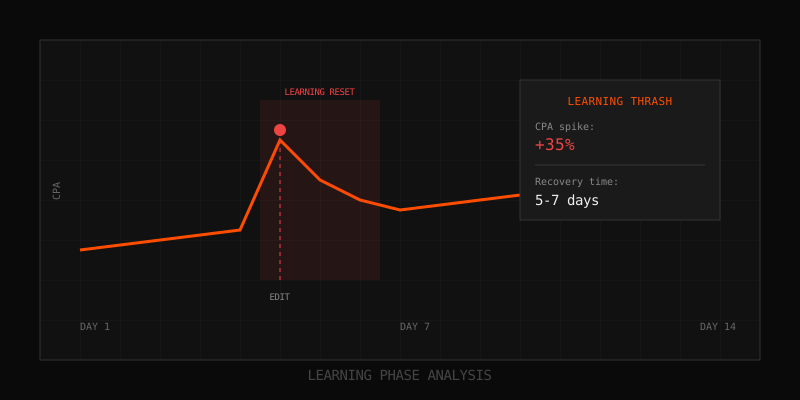
You checked performance on Monday and noticed CPA creeping up. You adjusted the budget. Tuesday, targeting looked off, so you tweaked the audience. Wednesday, you added a new creative. Thursday, you changed the bid strategy. Friday, you are staring at a CPA that is 45% higher than it was a week ago, wondering what went wrong.
What went wrong is simple: you triggered learning phase reset four times in five days. Each reset cost you 20-50% in efficiency while the algorithm relearned. Instead of fixing problems, your edits compounded them. The solution is not to stop editing—it is to batch your edits strategically so one reset accomplishes what four separate resets could not.
Why Edits Trigger Learning Phase Resets
Meta's algorithm builds a model of who to show your ads to based on observed performance. When you make a significant change, that model becomes invalid. The algorithm cannot predict how your new budget level, audience, or creative will perform—it needs fresh data.
Learning phase is the algorithm's way of gathering that data. It experiments with different audiences, placements, and delivery patterns to rebuild its model. This experimentation is expensive: CPA typically runs 20-50% higher during learning as the algorithm tests hypotheses that do not pan out.
The key insight: every significant edit triggers a new learning phase, regardless of whether the previous one finished. If you make four edits in a week, you pay four learning phase premiums. But if you batch those same four changes into a single session, you pay the premium once.
The Math of Batched vs Sequential Edits
Let us model the impact with concrete numbers. Assume your baseline CPA is $20, learning phase premium is 30%, and each learning phase requires 7 days to exit with your conversion volume.
Sequential Editing (One Edit Per Week)
| Week | Edit Made | Learning Status | Effective CPA |
|---|---|---|---|
| 1 | Budget change | In learning | $26 |
| 2 | Targeting change | Reset, in learning | $26 |
| 3 | New creative | Reset, in learning | $26 |
| 4 | Bid strategy change | Reset, in learning | $26 |
| 5-8 | None | Exit learning | $20 |
Total cost over 8 weeks: 4 weeks at $26 CPA + 4 weeks at $20 CPA. If you generated 50 conversions per week, that is 200 conversions at $26 = $5,200 plus 200 conversions at $20 = $4,000. Total: $9,200.
Batched Editing (All Edits in One Session)
| Week | Edit Made | Learning Status | Effective CPA |
|---|---|---|---|
| 1 | All four changes | In learning | $26 |
| 2-8 | None | Exit learning, stable | $20 |
Total cost over 8 weeks: 1 week at $26 CPA + 7 weeks at $20 CPA. That is 50 conversions at $26 = $1,300 plus 350 conversions at $20 = $7,000. Total: $8,300.
Savings from batching: $900 over 8 weeks. Scale that across a year and multiple ad sets, and batching saves thousands in unnecessary learning phase premiums.
Which Edits to Batch Together
Not all edits need batching—only those that trigger learning resets. Here is how to categorize:
High-Impact Edits (Always Batch)
- Budget changes over 20%: Any increase or decrease exceeding 20% triggers a reset. Plan your budget trajectory in advance.
- Targeting changes: New interests, lookalikes, custom audiences, or demographic restrictions invalidate the existing model.
- Optimization event changes: Switching from Purchase to Add to Cart (or vice versa) requires complete relearning.
- Bid strategy changes: Moving from Lowest Cost to Cost Cap or Bid Cap changes how the algorithm optimizes.
- Bid cap or cost cap value changes: Significant cap adjustments affect which auctions you can win.
Low-Impact Edits (Can Make Anytime)
- Budget changes under 20%: Small adjustments do not trigger full resets. Use these for gradual scaling.
- Ad copy or creative changes within existing ads: Editing text or swapping images in existing ads causes minimal disruption.
- Schedule changes: Adjusting when ads run does not invalidate audience learnings.
- Naming and organizational changes: Renaming ad sets or campaigns has no algorithmic impact.
The Weekly Batching Protocol
The most practical approach is a weekly edit window. Here is how to implement it:
Step 1: Collect Change Requests Throughout the Week
Maintain a running list of desired changes. Every time you think you should adjust something, add it to the list instead of making the change immediately. Include:
- What you want to change
- Why you think it is necessary
- Expected impact
Step 2: Review the List Before Your Edit Window
Before your designated edit day (many teams choose Monday or Friday), review your accumulated changes:
- Are all changes still necessary given current performance?
- Do any changes contradict each other?
- Can low-impact changes wait for another week?
- Are you changing things because of data or emotions?
Step 3: Execute All High-Impact Edits in One Session
Make all your high-impact changes within a single 30-minute window. The order does not matter—they will all trigger learning phase anyway. Document what you changed for future reference.
Step 4: Hands Off for 7+ Days
After your batch edit, commit to no changes for at least 7 days (ideally until your ad set exits learning). New change requests go on next week's list.
Building a Batch Edit Calendar
A visual calendar helps teams maintain discipline. Here is a template structure:
Monthly View
| Week | Monday | Tuesday-Sunday | Status |
|---|---|---|---|
| Week 1 | Edit Window | Hands Off | Learning Phase |
| Week 2 | Monitor Only | Hands Off | Exit Learning |
| Week 3 | Edit Window | Hands Off | Learning Phase |
| Week 4 | Monitor Only | Hands Off | Exit Learning |
This bi-weekly rhythm gives you edit flexibility while ensuring ad sets spend meaningful time outside learning phase. Adjust based on your conversion volume—higher volume allows more frequent edit windows.
What to Do Between Edit Windows
Hands-off does not mean ignore your ads. Between edit windows:
Monitor, Do Not React
Watch performance metrics daily, but resist the urge to fix things immediately. Learning phase volatility is normal. Document concerning trends for review at your next edit window.
Prepare Next Week's Changes
Use the waiting time productively. Research new audiences, create new creatives, plan budget allocations. When your edit window arrives, you will be ready to execute efficiently.
Run Low-Impact Tests
Low-impact changes like ad copy variations within existing ads can be made anytime. Use between-window time for these smaller optimizations that do not trigger resets.
Analyze What Is Working
Instead of changing things, understand why they are working (or not). Dig into audience insights, placement breakdowns, and creative performance. Better analysis leads to better batch edit decisions.
Exception Handling: When to Break the Batch Rule
Sometimes immediate action is required. Valid exceptions to the batching rule:
Emergency Situations
- Policy violations: If an ad is flagged or at risk of account restriction, fix immediately.
- Brand safety issues: Ads appearing next to inappropriate content or conveying wrong messaging.
- Budget exhaustion: If budget runs out mid-week and the ad set is critical, emergency top-up is justified.
- Product availability: Advertising sold-out products wastes spend and frustrates customers.
Severe Underperformance
If CPA exceeds 3x your target for 3+ consecutive days with sufficient data, intervention may be warranted. But be honest: is this truly severe, or are you just impatient? Most seemingly severe situations resolve with patience.
External Events
Major external changes—competitor launches, market shifts, seasonal events—may require immediate response. But even here, consider whether the response can wait until your next edit window.
Team Discipline: Preventing Rogue Edits
Batching only works if everyone follows the system. In team environments:
Establish Clear Ownership
Designate who can make edits and when. If multiple people have Ads Manager access, they need to coordinate. One person making a quick fix can reset learning for everyone's work.
Document Everything
Maintain an edit log: who changed what, when, and why. This creates accountability and helps diagnose performance shifts. Activity History in Ads Manager shows changes, but a human-readable log is more useful for team discussions.
Review Before Approval
For significant changes, require a second set of eyes. A quick message asking whether a planned change makes sense catches mistakes and maintains batching discipline.
Automate Guardrails
If using automated rules for scaling, configure them carefully. Rules that trigger budget changes daily can cause thrash. Set wide thresholds, long lookback windows, and frequency caps on rule execution.
Measuring Batching Effectiveness
Track these metrics to validate your batching strategy:
Time in Learning Phase
What percentage of ad set-days are spent in learning? Lower is better. Track this weekly and monthly. If you are consistently above 30%, your edit frequency is too high.
Learning Phase to Exit Ratio
How many learning phases end successfully vs. getting reset? If you are resetting before exit more than 20% of the time, you are editing too frequently.
CPA Variance
Compare CPA during learning vs. after exit. High variance indicates frequent resets are costing you. Stable post-exit CPA with occasional learning phase spikes suggests healthy batching.
Edit Frequency Trend
Are you making fewer high-impact edits over time? Good batching discipline should reduce edit frequency as you learn what works. If edits are not decreasing, you may be changing things that do not need changing.
Advanced Batching: Staged Rollouts
For accounts with many ad sets, batch edits can still cause disruption if applied everywhere at once. Consider staged rollouts:
Test Set First
Apply batched changes to a subset of ad sets first. Wait for learning to exit and evaluate. If successful, roll out to remaining ad sets in the next edit window.
Staggered Windows
Instead of one edit window for all ad sets, stagger windows across the month. Ad Set Group A gets edited in week 1, Group B in week 2. This ensures some ad sets are always out of learning and delivering efficiently.
Portfolio Approach
Maintain a stable portfolio of proven ad sets that rarely get edited and an experimental portfolio where you batch test changes. The stable portfolio delivers predictable results while experiments drive learning.
Key Takeaways
- Every significant edit triggers learning phase, costing 20-50% in CPA premium
- Batching multiple edits into one session means paying the premium once, not multiple times
- Establish weekly or bi-weekly edit windows and stick to them
- Keep a running list of desired changes and review before each window
- Low-impact edits (under 20% budget changes, copy tweaks) can happen anytime
- Track time in learning phase and learning-to-exit ratio to measure batching effectiveness
- Team discipline is critical—one rogue edit can undo batching benefits
FAQ
What if I have urgent changes that cannot wait?
True emergencies (policy violations, brand safety, budget exhaustion) justify immediate action. But most seemingly urgent changes can actually wait. Ask yourself: will waiting 3-5 days materially damage results, or are you just uncomfortable with the current performance?
How do I know if my edit frequency is too high?
If your ad sets spend more than 40% of time in learning phase, or if learning phases frequently reset before completion, you are editing too often. Start tracking these metrics to establish a baseline.
Does batching work with CBO (Campaign Budget Optimization)?
Yes. CBO does not prevent learning phase at the ad set level. Budget shifts between ad sets within a CBO campaign do not trigger resets, but changes to the overall campaign budget or individual ad set parameters still do. Batch those changes.
What if different ad sets need different changes?
You can still batch—just make each ad set's changes during the same edit window. The goal is minimizing total edit sessions, not making identical changes everywhere. One window, multiple ad sets, different changes per ad set means one round of learning phase premium.
Learn more: How it works · Why bundles beat raw thread history